Cable Marking Tags, Cable Ties
Why Grade 316 Stainless Steel is the Best Choice for Cable Ties and Cable Tags
Estimated reading time: 8 minutes
Key Takeaways
- Grade 316 stainless steel is the industry standard for cable ties due to its superior corrosion resistance and durability in harsh environments.
- It contains molybdenum, which enhances resistance to pitting and crevice corrosion, making it ideal for coastal and industrial settings.
- From marine and offshore applications to chemical processing, Grade 316 is non-negotiable for safety and compliance in crucial projects.
- Although more expensive than non-metal alternatives, Grade 316 stainless steel’s longevity reduces total ownership costs over time, ensuring reliability and client satisfaction.
When you are out on an industrial site or fitting out a marine vessel, the last thing you want to worry about is your cable management failing. You need equipment that installs fast, stays put, and withstands whatever the Australian environment throws at it. That is where Grade 316 stainless steel comes in. It is not just another metal option; it is the industry standard for durability and reliability in harsh conditions.
For electrical contractors and switchboard manufacturers, understanding the material difference is crucial. Choosing the wrong grade can lead to corrosion, snapped ties, and costly rework. This guide breaks down exactly why Grade 316 stainless steel is the superior choice for your cable ties and tags, and why professionals across Australia rely on it for their most critical projects.
Understanding Grade 316 Stainless Steel
You might see “stainless steel” on a spec sheet and assume it’s all the same. It isn’t. Stainless steel comes in various grades, defined by their chemical composition. The most common are Grade 304 and Grade 316. While Grade 304 is fine for your kitchen sink or indoor appliances, it often fails when exposed to salt, chlorides, or industrial chemicals.
Grade 316 is different. It contains molybdenum, a chemical element that drastically improves corrosion resistance. This addition transforms the steel into a material that resists pitting and crevice corrosion, specifically in chloride-rich environments like coastal areas or chemical plants.
The “Marine Grade” Advantage
You will often hear Grade 316 referred to as “marine grade” stainless steel. This isn’t just marketing fluff. It earned this name because it is one of the few metals that can survive long-term exposure to saltwater without rusting away.
For an electrician working on a dock in Fremantle or a desalination plant in Queensland, this distinction matters. Using inferior ties in these environments leads to rust bleeding onto cables, structural weakness, and eventually, failure. Grade 316 stays bright, strong, and intact, ensuring compliance and safety long after you have left the site.
Key Properties That Define Durability
Why exactly does Grade 316 outperform the rest? It comes down to three core properties: superior corrosion resistance, high tensile strength, and its non-magnetic nature.
1. Superior Corrosion Resistance
Rust is the enemy of any electrical installation. Once oxidation starts, it compromises the integrity of the hold. Grade 316 stainless steel forms a passive layer on its surface that self-repairs if scratched. The molybdenum content we mentioned earlier fortifies this layer against chlorides.
Whether it is sea spray, de-icing salts, or harsh industrial cleaning agents, Grade 316 holds its ground. This means you won’t be called back to the site in six months to replace corroded tags that are no longer legible or ties that have snapped due to rust.
2. High Tensile Strength for Heavy Loads
Plastic ties have their place, but when you are securing heavy power cables or bundling pipes, you need serious strength. Grade 316 stainless steel cable ties offer incredible tensile strength. They don’t stretch or degrade under UV light like alternative products might.
When you tighten a stainless steel tie, it stays tight. This is critical for maintaining organisation in high-vibration environments, such as near heavy machinery or on transport vessels. You get a secure, permanent fix that handles the physical stress of industrial operations.
3. Non-Magnetic Properties
This is a detail that professionals appreciate. Grade 316 stainless steel is virtually non-magnetic. In sensitive electronic environments or near navigation equipment, magnetic interference can cause havoc. Using non-magnetic ties and tags ensures that your cable management system doesn’t interfere with the equipment it is supporting. It is a small detail that speaks to the quality and suitability of the material for high-spec electrical work.
Applications Where Grade 316 is Non-Negotiable
While you can use Grade 316 anywhere, there are specific sectors where it is the only responsible choice. If you operate in these industries, “compliance assured” often means using Grade 316.
The Marine and Offshore Industry
This is the home turf for Grade 316. Ships, oil rigs, docks, and coastal infrastructure are constantly bombarded by salt spray. Standard metals disintegrate here.
- Shipbuilding: Securing wiring harnesses in engine rooms and on decks.
- Port Infrastructure: Managing cables for cranes and lighting towers.
- Offshore Platforms: Identifying pipes and cables where maintenance access is difficult and expensive.
In these scenarios, durability isn’t a luxury; it’s a safety requirement. A snapped cable tie on a storm-tossed vessel creates a loose cable hazard that no crew needs.
Chemical and Industrial Processing
Food processing plants, pharmaceutical factories, and petrochemical refineries use aggressive chemicals for cleaning and production. These substances eat through lesser metals and plastics.
Grade 316 offers excellent resistance to most chemicals commonly found in industrial environments. It also handles extreme temperatures, making it safe for areas near furnaces or cryogenic storage. Because it is easy to clean and doesn’t harbor bacteria in corrosion pits, it is also the hygienic choice for food and beverage facilities.
Mining and Heavy Machinery
Australian mining sites are some of the toughest environments on earth. Dust, heat, vibration, and chemical exposure are daily realities.
- Underground Mining: Resisting acidic groundwater and damp conditions.
- Heavy Equipment: Securing hydraulic lines on excavators and haul trucks.
- Processing Plants: Withstanding the abrasion and chemicals used in mineral extraction.
Miners need equipment that is engineered for toughness. Grade 316 stainless steel tags ensure that identification remains legible despite the dust and grime, while the ties keep critical lines secure on vibrating machinery.
Compliance and Safety: Why It Matters
As an electrical contractor, you live and die by compliance. Australian Standards set the bar, but your choice of materials determines if you clear it.
Using Grade 316 stainless steel demonstrates a commitment to quality and longevity. It shows inspectors and clients that you haven’t cut corners. In fire scenarios, stainless steel ties play a critical role. Unlike plastic, they don’t melt at low temperatures. They keep cables bundled and supported longer during a fire event, which can be crucial for maintaining emergency systems or preventing falling cables from blocking escape routes.
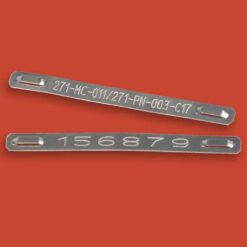
Furthermore, properly marked cables are a safety necessity. If a tag corrodes and becomes unreadable, maintenance technicians are working blind. Grade 316 tags, engraved or embossed, remain legible for decades, ensuring that future work can be carried out safely and efficiently.
Comparing Coated vs. Uncoated Stainless Steel
When selecting your cable ties, you will often choose between uncoated (bare) and coated Grade 316 stainless steel. Both have their place.
Uncoated Grade 316 cable ties are ideal for high-temperature applications or where no insulation is required. They offer the raw strength and corrosion resistance of the metal.
Coated Grade 316 ties usually feature a polyester or epoxy coating. This coating provides:
- Improved insulation: Preventing contact between dissimilar metals (galvanic corrosion).
- Cable protection: Cushioning the cable insulation from the hard edge of the steel.
- Added corrosion barrier: An extra layer of defense against the elements.
For most general electrical work where cables need bundling, coated ties are often the preferred choice to protect the cable sheath. However, the core material – the steel underneath – must be Grade 316 to ensure the tie doesn’t fail from the inside out.
Installation Efficiency
You might think that upgrading to stainless steel complicates installation. It doesn’t. With the right tools, applying stainless steel cable ties is just as fast as using nylon ones.
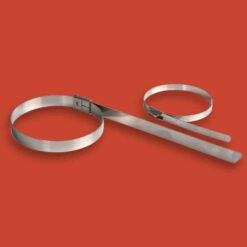
Modern stainless steel cable ties often feature a roller ball locking mechanism. You simply slide the tail into the head, and an internal ball bearing locks it securely in place. It is a smooth, low-insertion force action that speeds up application.
For professional results, use a quality tensioning tool. These tools tighten the tie to a preset tension and cut off the excess flush, leaving no sharp edges. This prevents injury to workers and damage to cables. It turns a manual job into a quick, precise operation, helping you meet those tight project deadlines.
The Cost-Benefit Analysis
Yes, Grade 316 stainless steel cable ties cost more upfront than nylon or Grade 304. But experienced project managers know that purchase price is only one part of the equation. You have to look at the total cost of ownership.
Imagine installing thousands of nylon ties on a solar farm, only to have them brittle and snap after two years of UV exposure. The cost to send a crew out to re-tie everything dwarfs the original savings.
With Grade 316, you install it once. It lasts for the life of the installation. You eliminate maintenance costs, avoid reputational damage from failures, and ensure client satisfaction. For commercial and industrial contracts, reliability pays for itself.
Conclusion
Your reputation relies on the quality of your work. Every time you finish a switchboard or wire a facility, you leave your signature on that project. Using Grade 316 stainless steel cable ties and cable tags ensures that your work stands the test of time.
It offers unmatched resistance to corrosion, incredible strength, and peace of mind in the harshest Australian environments. From the mines of the Pilbara to the marinas of Sydney, it is the professional’s choice for secure, compliant cable management.
Ready to upgrade your cable management?
Don’t risk your next project with inferior materials. Explore Sunlec Cableties’ extensive range of Grade 316 Stainless Steel Cable Ties and Tags today. We stock a massive inventory for next-day delivery, ensuring you have the right gear when you need it.
Grade 316 Stainless Steel Products
-

Stainless Steel Cable Marking Tag
$1.90 -
Stainless steel cable tie 1000mm x 7.9mm (100pk)
$208.00 -
Stainless steel cable tie 100mm x 4.6mm (100pk)
$40.00 -
Stainless steel cable tie 150mm x 4.6mm (100pk)
$42.00 -
Stainless steel cable tie 200mm x 4.6mm (100pk)
$45.00 -
Stainless steel cable tie 200mm x 7.9mm (100pk)
$57.00 -
Stainless steel cable tie 260mm x 4.6mm (100pk)
$48.00 -
Stainless steel cable tie 260mm x 7.9mm (100pk)
$59.00 -
Stainless steel cable tie 360mm x 4.6mm (100pk)
$54.00